
You can support us by utilizing links to our recommended items and potentially generate a small commission for our website. Rest assured, there is no extra cost incurred for you.

Research-based review, November 2026. The ATN OTS 4T 384 1.25–5× is a thermal imaging monocular, not a conventional digital infrared or image-intensifier night-vision device. It detects temperature contrast rather than reflected visible light. The linked Amazon listing is ASIN B09HTW39Q2. We compare manufacturer specifications and buying considerations; this review does not claim independent hands-on testing.
The 384 series offers thermal imaging with a manufacturer-listed 384 × 288 sensor. The 1.25–5× variant provides a wide starting view, recording, Wi-Fi and a Smart Range Finder. ATN also sells other OTS 4T versions with different sensor resolutions and magnification, so the precise SKU matters.
Thermal detection is not identification. Identifying a distant subject reliably requires more detail than simply detecting a heat source. Current price, ratings and stock should be checked on the exact Amazon listing.
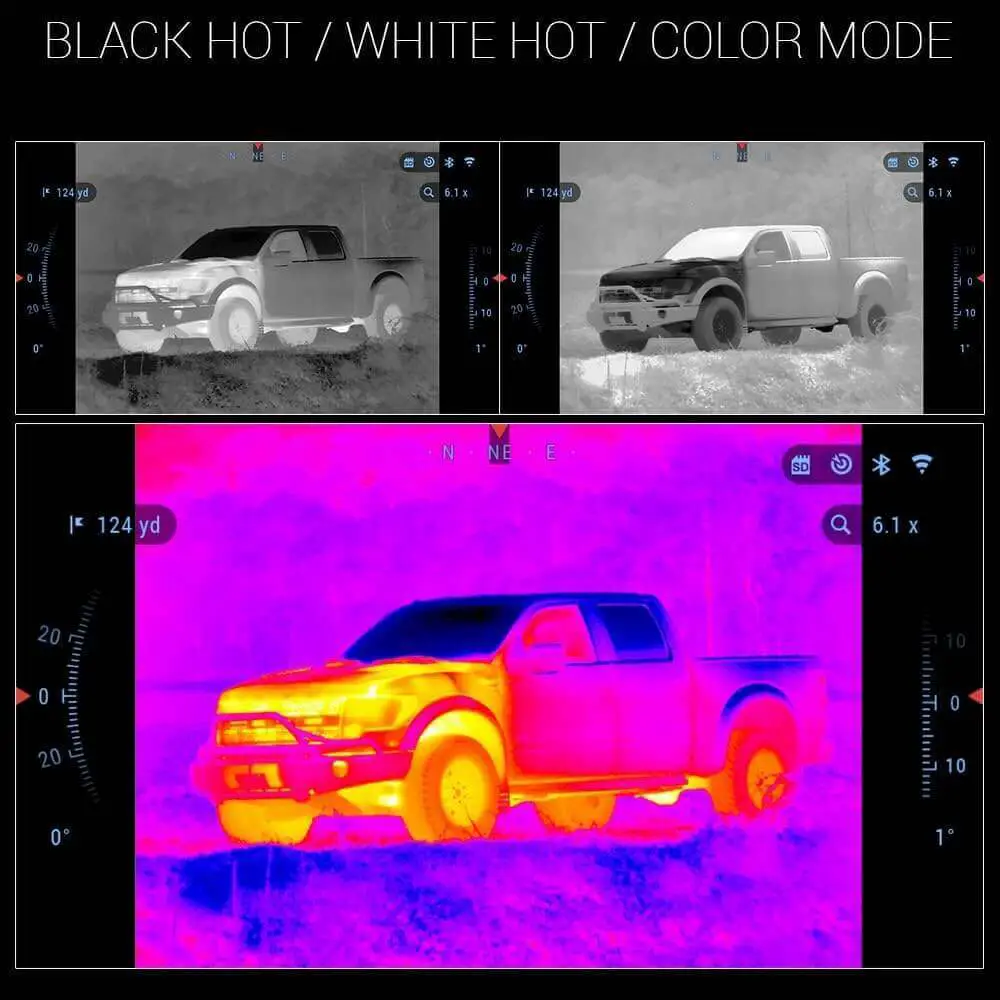
In the realm of thermal imaging, the way heat signatures are visually represented can make a significant difference in detection, recognition, and overall user experience. “Black Hot,” “White Hot,” and “Color Mode” are distinct display palettes that cater to this need, each offering a unique perspective on the captured thermal data.
These modes, commonly found in modern thermal imaging devices, allow users to customize their view based on environmental conditions, specific tasks, or personal preferences. This introduction will delve into the nuances of these three pivotal modes, shedding light on their functionality and use cases.
White Hot: warmer areas display lighter than cooler surroundings. Black Hot: warmer areas display darker. Color modes: false-color palettes help interpret relative heat contrast. These settings change image presentation rather than increasing sensor resolution. None creates the ordinary color detail of a daylight camera. Check the ATN manual for available palettes and controls.
These are manufacturer-published figures, not measurements conducted by this website. Review the exact model selection and manual before purchasing.
Strengths: thermal imaging without relying on visible light; wide 1.25× starting view for observation; manufacturer-listed video recording and Wi-Fi; rechargeable power with advertised long runtime. These are product-specification advantages, not results from our own field test.
Limitations: at roughly 850 g, this monocular is relatively heavy for extended one-handed use. It is priced above many basic digital IR viewers, and thermal heat maps do not necessarily provide fine visual identification detail. Battery endurance, compatibility, availability and warranty should be verified for the current seller and exact package.
Always remember that pros and cons can be subjective, and what might be a disadvantage for one user might not be the same for another. It’s essential to align the product’s capabilities with individual needs and preferences.
In the vast domain of optical equipment, capturing moments isn’t just about clarity but also about the context. The Night Vision Device we’re diving into today stands out for its ability to pierce the darkness and its adeptness in documenting the nocturnal world.
Merging top-tier video recording capabilities with user-centric design, this device promises more than just sight; it pledges memories. Let’s delve deeper into its intricate features and understand what sets it apart in night-time optics.
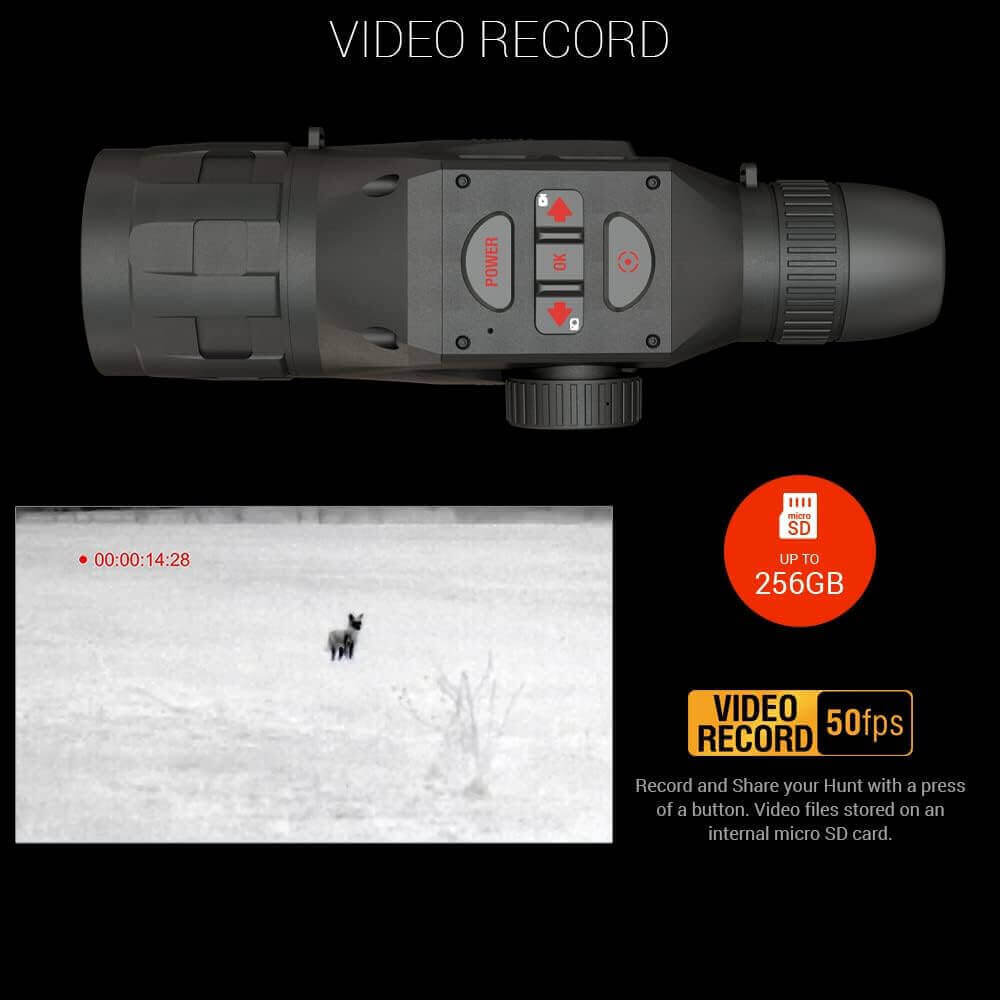
Recording: ATN states that the OTS 4T 384 can save video in 1280 × 960 format with supported frame rates listed in its manual. This is the recorded output; the heat-sensing detector itself has 384 × 288 pixels. Recording duration depends on storage and configuration. A timestamp visible in a sample clip is not a fixed maximum recording duration, so earlier claims based on a sample timestamp should not be treated as technical specifications.
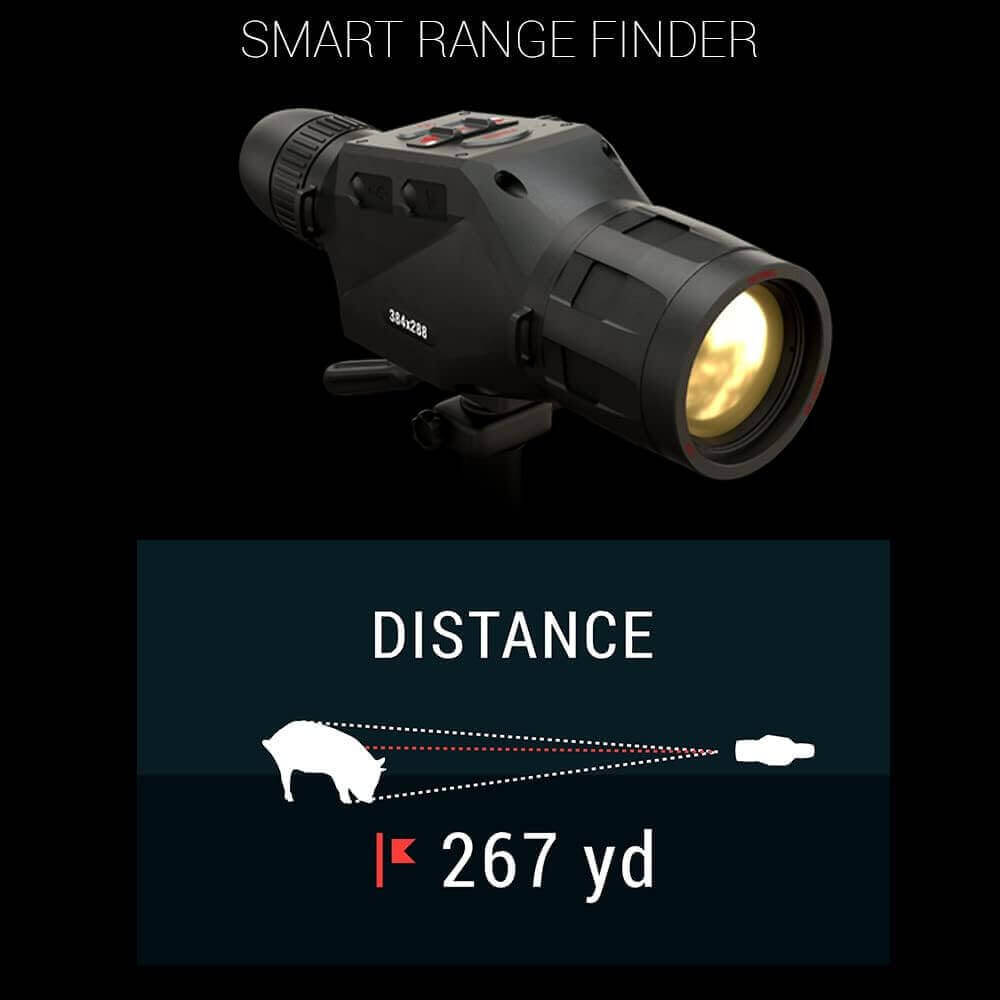
Accuracy and precision are key factors determining success or failure in optical devices. The SMART RANGE FINDER, a standard component of contemporary optical instruments, was developed to fill this void.
Combining cutting-edge technology with real-world utility, this tool promises to do more than just show you the globe; it will also put everything in the proper perspective of your travels. As we explore its inner workings, we’ll see that it’s a groundbreaking addition that puts a wealth of useful information within reach of the average user.
The manufacturer includes a Smart Range Finder for estimating distance through the device interface. It is not a guarantee of exact range accuracy and should not be confused with an independent laser distance measurement. A thermal detection-range figure also does not guarantee that a distant object can be correctly identified.
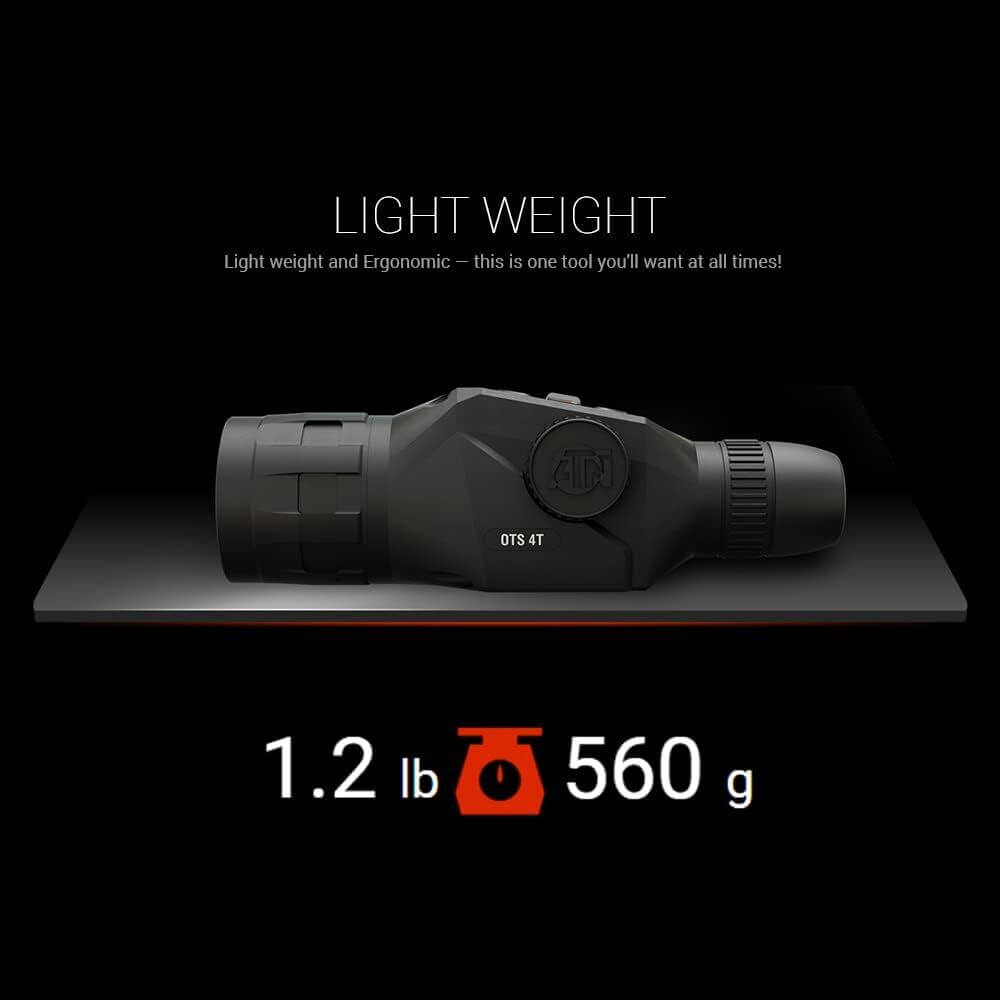
In the intricate dance of functionality and design, the weight of a tool often plays a pivotal role, especially when precision and comfort are paramount. The LIGHTWEIGHT feature of the OTS 4T isn’t just a technical specification but a commitment to user-centric design. Balancing portability with performance, this characteristic ensures that enthusiasts and professionals can engage with their surroundings without the burden of heft.
Weight and dimensions: ATN lists approximately 850 g (1.87 lb) and 220 × 80 × 75 mm for the 384 1.25–5× unit. It is a handheld monocular but should not be described as pocket-light. Consider grip, hand strap, eye position and carry case for prolonged sessions; confirm included accessories on the actual listing.
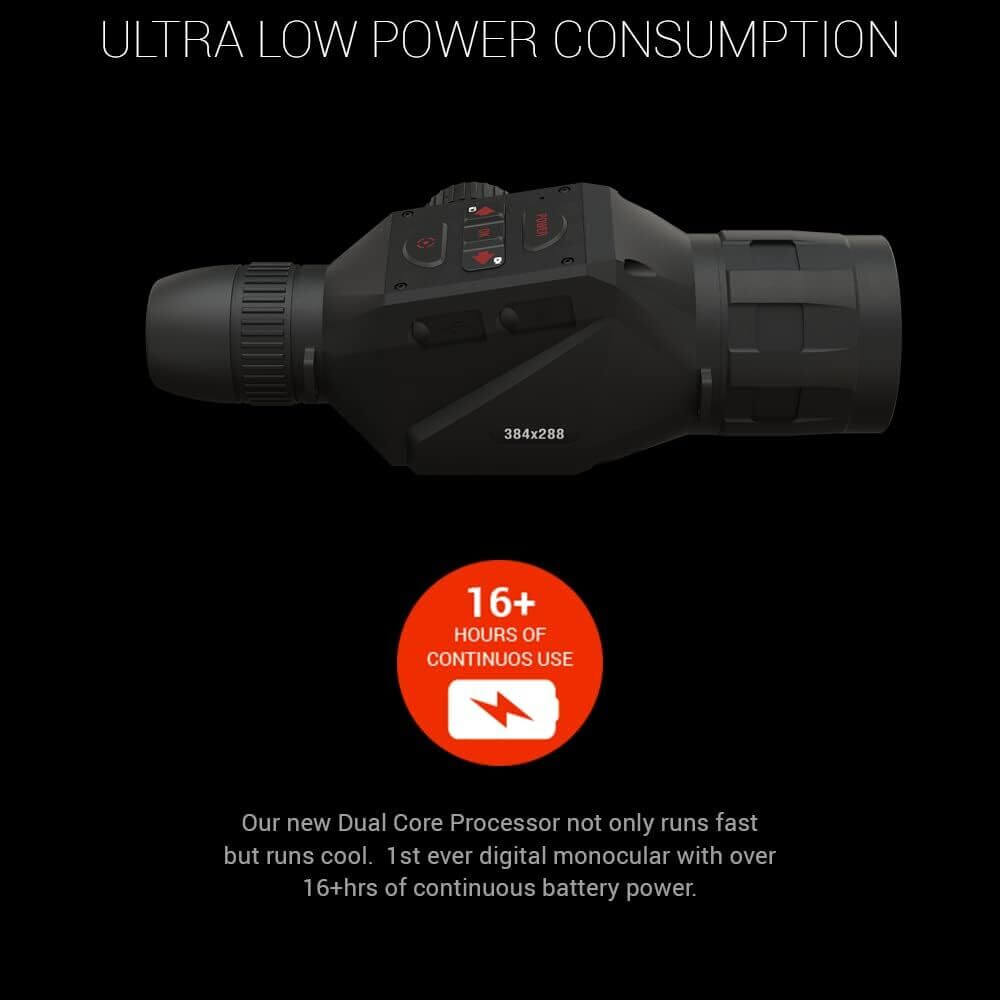
In portable optical equipment, durability is just as important as sharpness. The ULTRA LOW POWER CONSUMPTION function is proof of this idea; it allows users to briefly see their surroundings and interact with them for longer than ever before.
This is more than just a list of technical requirements; it’s a beautiful balance of cutting-edge design and practical application. As we progress, you’ll see how this energy efficiency affects the user experience, making the device a reliable travel companion on long overnight excursions.
Battery: ATN advertises over 16 hours of continuous use for the OTS 4T platform. Real runtime can be shorter depending on display settings, wireless activity, temperature and battery condition. Check the manufacturer instructions for charging and supported power accessories rather than treating the headline runtime as guaranteed.
Buying Guide
Choose thermal if you need to observe temperature contrasts without a visible-light source. Choose digital infrared if you primarily need lower-cost black-and-white video at closer ranges and can use an IR illuminator. Consider image intensification when a scene resembling visible-light viewing is more important than a heat map.
For this ATN product compare exact SKU, thermal sensor, magnification, field of view, weight, recording, battery arrangements, seller warranty and local restrictions. Confirm current customer reviews and availability on the actual Amazon listing.
Overview: The ATN OTS 4T 384 1.25–5× combines thermal sensing, an HD display, digital recording, Wi-Fi and a range-estimation feature. Its wide base magnification is useful for scanning broader scenes; price and approximately 850 g weight are trade-offs. It shows relative heat contrast, not standard daytime color images.
Verdict: This is a premium thermal observation monocular rather than a generic night-vision viewer. Consider it when thermal detection is genuinely needed and the cost and weight fit your application. We have not performed hands-on tests; the specifications here are sourced from ATN. Verify the current Amazon variant, price, availability, return conditions and customer feedback before ordering.
The ATN Night Vision Monocular stands out with its advanced thermal imaging in the evolving realm of night vision devices. However, with technological advancements, various alternatives now offer a range of features, from compact designs to feature-packed monoculars. Let’s explore some of these alternatives to help you find the ideal night vision tool for your needs.
PVS-14 Night Vision Monocular:
Bushnell Night Vision Monocular:
Stealth Cam digital monocular: Unlike the ATN thermal model, this uses electronic image sensing and infrared illumination; it is not a traditional image intensifier or a thermal detector. It can be a more economical choice for basic digital infrared viewing. Confirm the exact Stealth Cam model, recording functions and accessories on its product page.
Does ATN OTS 4T use ordinary night vision? No. It is a thermal device that shows temperature contrast rather than an ordinary visible-light image.
Can it detect heat in darkness? Yes, thermal sensing does not require visible light, although conditions and obstructions affect results.
Does the rated detection distance guarantee identification? No. Detecting heat and recognizing the source are different tasks.
Are Amazon ratings and prices fixed? No. Check the current listing for the selected ASIN and seller.

Sources and disclosure: This is a manufacturer-specification review, not a personal field test. See official ATN details and the published OTS 4T manual. Affiliate links use our Amazon Associates tracking tag and may generate a qualifying commission.
Related Post
Disclaimer:
Nightvisioninsights.com’s content is for informative purposes only. We make no claims regarding the items’ accuracy, reliability, appropriateness, or availability. You use this material at your own risk. We may receive small Amazon Associate fees on eligible purchases. Our website’s items, brands, trademarks, and pictures belong to their owners.
Copyright © 2023 | Night Vision Insights | Development & Maintenance by Mehedi Hasan